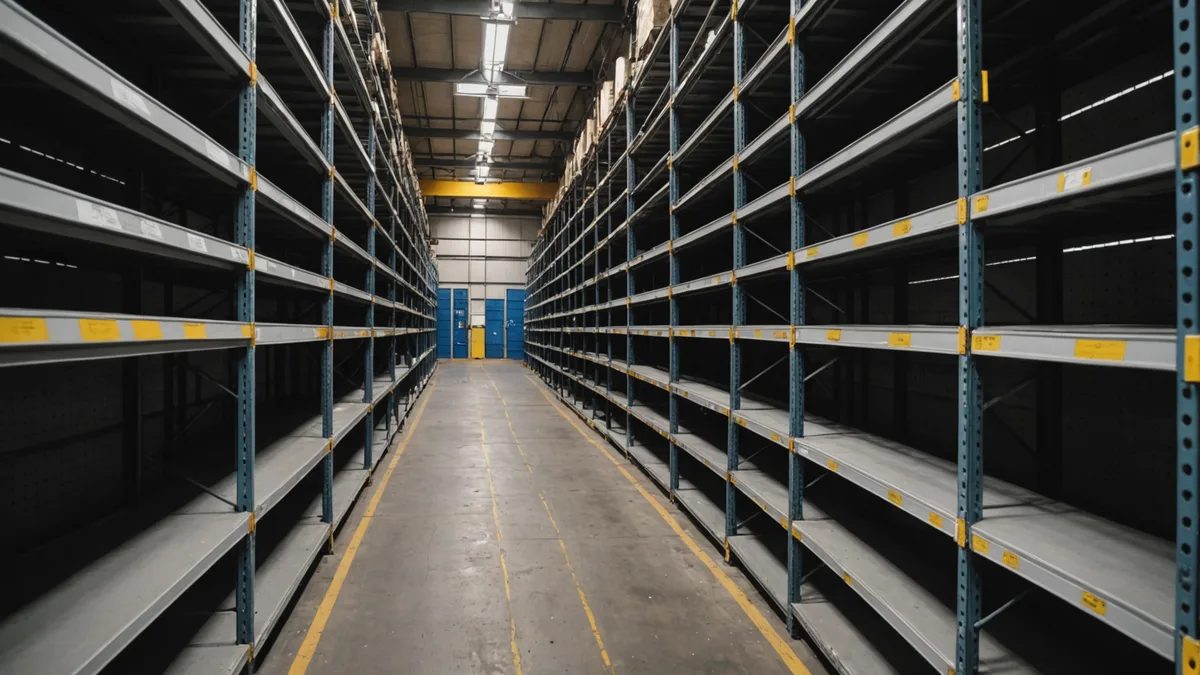
Lead times are not an abstract supply chain metric. They translate directly into the gap between when you order and when a trade can work. Get the timing wrong and you have a bricklayer standing idle waiting for blocks, or a second-fix electrician booked in before the first-fix materials are on site. We have been watching how lead times are behaving across the contractors using Prolo this year and the picture is worth setting out clearly.
The framing here is practical. We are not modelling global supply chains. We are describing what UK contractors are actually seeing when they place orders with their established merchant and distributor relationships, and what the implications are for scheduling residential and light commercial work in 2026.
Structural Timber: The Pattern Has Stabilised, Mostly
The extreme volatility in structural softwood that characterised 2021 and 2022 has largely settled. European timber production has recovered, and UK merchant stock levels for standard structural sizes have returned to something close to normal. For C16 and C24 floor joists, ceiling binders, and standard rafter sections in common lengths, most national and regional merchants can achieve three to seven working days for job lots that are not exceptionally large.
The exception is engineered timber products. I-joists, LVL beams, and glulam sections continue to carry longer lead times, typically two to four weeks depending on the span and profile. If your structural engineer has specified proprietary beams, ordering on a just-in-time basis is likely to cause problems. These items need to be ordered before groundworks are complete in most cases, not when the frame is ready to receive them.
There is also a regional dimension. Merchants serving areas with active new build programmes can run lower stock on high-demand sizes, particularly 47x200 and 47x225 which are commonly specified for residential floor construction. It is worth confirming stock availability rather than assuming it, even for routine sizes.
Insulation: Thickness Matters More Than Type
PIR rigid board insulation, EPS bead and mineral wool batts are all generally available within a reasonable window for standard thicknesses and standard applications. The complication is that building regulation requirements have pushed demand toward higher performance thicknesses, and the thicker boards in particular can run low at busy periods. 150mm PIR board and above is worth checking availability on before it becomes a critical path item.
Full-fill masonry cavity batts in the 100mm range have been relatively well-stocked, but again there are regional merchant differences. A contractor running a small development in the North West told us recently that they had run into a two-week wait for 150mm glass mineral wool batts from their usual branch, not because of national shortage but because a large commercial insulation contract had cleared local stock. Their fallback merchant had stock at a slightly higher price but could deliver within three days. The point is not that product was unavailable nationally, but that relying on one supplier without checking alternatives was the risk.
Steel and Structural Products: Longest and Most Variable
Structural steel sections and lintels are where lead times have shown the most variation this year. Universal beams and columns for commercial work can still carry four to eight week lead times depending on section size and the mill's current order book. Residential-scale steel work, including standard flitch plates and lintel sections from stock, is generally much quicker but not immune to stock gaps at busy periods.
For any project where a structural steel element sits on the critical path, the order should go in at design sign-off, not at groundworks completion. Two contractors in our early access programme reported delays earlier this year on residential extension projects where the structural engineer's drawing was finalised in January and the steel was not ordered until February, by which point the section required had a six-week lead time that pushed the project past its planned completion date.
This is not a new lesson, but it is one that keeps coming up: critical-path steel is not a late-stage order. It is an early-stage order with a long execution tail.
Aggregates, Block and Brick: Generally Stock-Led, With Delivery Constraints
Concrete blocks and common brickwork are broadly available from stock across most UK regions for residential volumes. The constraint here is usually not product availability but delivery. National merchant delivery fleets are often committed several days ahead, particularly in spring and autumn when residential groundworks and brickwork programmes peak. Getting a first delivery window that aligns with when you actually need materials on site requires ordering earlier than many contractors default to.
Specified bricks, including class A engineering, multi-stock handmade, and reclamation-matched facing, can carry two to ten week lead times depending on the manufacturer and current order volumes. If your project is using a non-standard specified brick, it is worth checking with the manufacturer directly, not just the merchant, before confirming the schedule with your client.
What This Means for Schedule Planning
The practical implication of the current lead time environment is straightforward: build your materials ordering timeline into the project programme before you build the construction timeline, not after. The two need to interact, and the construction programme cannot be realistic if the materials side is treated as something you deal with when each phase starts.
For a typical house extension or small new build, a procurement timeline that starts at detailed design sign-off rather than at groundworks commencement makes a real difference. It means critical items like structural steel, engineered timber, and specified brick are in the pipeline before the construction programme reaches the point where they are needed.
We are not suggesting that routine materials need six weeks of lead time. For standard block, common brick, softwood framing and insulation, a one to two week ordering horizon is usually sufficient in current conditions. The point is that the entire materials picture should be visible at programme start, categorised by whether items are stock-led or lead-time-led, so nothing sits waiting for an order that should have gone in three weeks earlier.
Where Contractor Behaviour Has Adapted
The contractors we see managing this well have made one consistent change: they have separated materials planning from materials ordering in their workflow. Planning happens at programme start and covers every item on the schedule, categorised by lead time risk. Ordering happens on a rolling weekly basis against that plan, with a consistent look-ahead window rather than a reactive response to immediate site need.
It is not a complicated shift in process. But it requires someone to own the materials programme and to update it regularly against actual site progress, not just against the original programme. When a phase slips or accelerates, the materials schedule needs to shift with it, not follow it by two weeks when the site manager notices something is about to run out.